

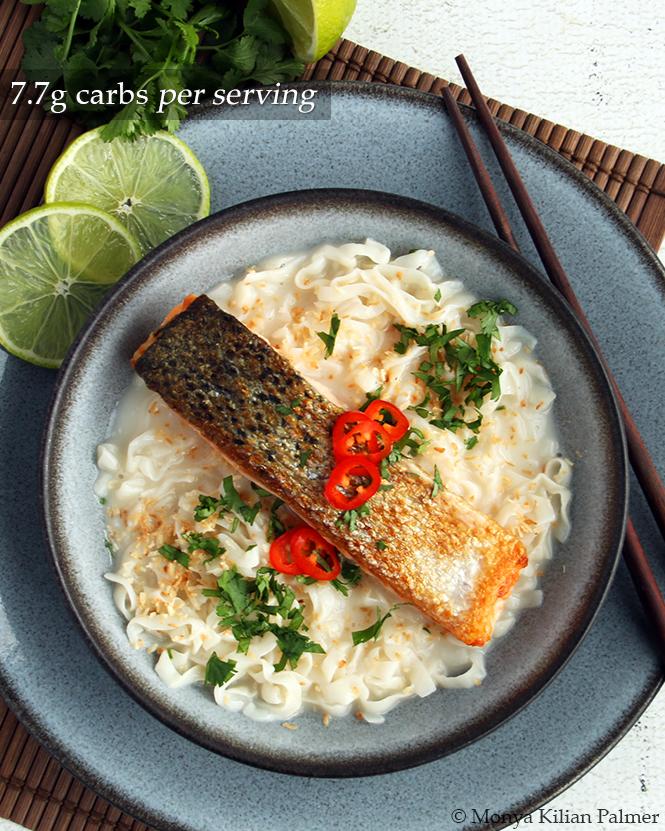
“When prepared properly, I love konjac / shirataki noodles. I have tried many brands, but here in the UK, Eat Water has got them spot-on with their “slim range”. In this recipe, I poached salmon in coconut milk which was infused with lemongrass, chili and ginger, then served it over warm ‘fettuccine‘ and added toasted desiccated coconut for additional texture and flavour. Its a lovely, light dish which happens to be very filling.” – Monya

 Fats of Life® is a keto and low carb recipe blog that I love to run as a hobby in my spare time. I am also the author of the best-selling Keto Kitchen Series of cookbooks. This includes my debut best-seller Keto Kitchen (2020). The fun and exciting Lazy Keto Kitchen (2021). And, the clever and inspiring Budget Keto Kitchen (2022). My 4th cookbook, Quick Keto Kitchen (2023) is as fantastic as the first three, and packed with spectacular, easy creations!


 The links above will take you to Amazon UK. For USA and other countries, see the global Amazon links here: Keto Kitchen ; Lazy Keto Kitchen ; Budget Keto Kitchen ; Quick Keto Kitchen.

The Glow Factor, 2025 by Penelope Corwin is available worldwide. The image above will link to Amazon UK. For USA and all other countries, click here.
More on Coconut Milk Poached Salmon…
Salmon is a fatty fish, rich in omega-3 fatty acids. It is a nutritional powerhouse, promoting heart health, reducing inflammation, and supporting brain function. Its high-quality protein content also aids in muscle growth and repair.

FOLLOW MONYA:
-

-

-

-

-

Coconut milk is a versatile ingredient that adds a delightful creaminess to dishes. It contains healthy fats that boost metabolism, improve digestion, and enhance nutrient absorption. Additionally, coconut milk is a source of medium-chain triglycerides (MCTs), which can aid in weight management.
Chilli, ginger, and lemongrass are spices that not only add flavour but also health benefits to meals. Chilli peppers contain capsaicin, known for its metabolism-boosting properties and pain relief. Ginger is renowned for its anti-inflammatory and digestive benefits. Lemongrass offers antioxidants and may aid in digestion and stress reduction.
Shirataki noodles, a low-calorie, low-carb alternative to traditional pasta, are gaining popularity among health-conscious individuals. Made from konjac root, they are a source of soluble fibre, which supports gut health and helps with weight management.

It is important to note that to maintain ketosis, it’s essential to track carbohydrate intake and ensure it aligns with your daily macro goals. Consulting with a healthcare professional is advised before making significant dietary changes. Scroll to the bottom to see the full macros and allergens for this Coconut Milk Poached Salmon dish, as well as all the Seafood recipes on Fats of Life®.


Salmon Poached in Coconut Milk
Per serving
Equipment
Ingredients
- 400 g (14.1 oz) konjac pasta, fettuccine shape
- 1 TB desiccated coconut
- 2 salmon fillets
- salt
- 2 tsp coconut oil
- 1 tin full-fat coconut milk, shaken well
- 1 lemongrass stalk, halved and smashed with a pestle
- 1 red chili, halved lengthways
- 1 thumb-size piece fresh ginger, peeled and thinly sliced
- 2 tsp sliced red chili, to garnish
- handful fresh coriander, plus extra to garnish
- generous squeeze lime juice
- 2 tsp fish sauce
Instructions
- Remove the konjac noodles from the packaging and rinse very well under cold, running water in a fine sieve. Do not be alarmed by the strange smell – just keep rinsing. Place the noodles into a pan of simmering water, changing the water several times while you finish the rest of the dish.
- Heat a deep-sided, non-stick pan and toast the desiccated coconut until golden - this only takes a few seconds and requires constant stirring with a silicon spatula. Remove the toasted coconut from the pan and set aside to use as a garnish.

- Remove the salmon fillets from their packaging and pat dry with kitchen paper. Season both sides of the salmon fillets with salt.

- Using the same pan you used for toasting the desiccated coconut, melt the coconut oil over high heat and fry the salmon skin-side down only for about a minute. Remove the fillets from the pan once the skin is golden and crispy. Set the salmon aside on a side plate, skin-side up while you prepare the coconut milk.

- Ensuring your elements are all prepped (use a heavy pestle to bash the lemongrass halves to release more flavour), continue with the recipe:

- Wipe the same pan clean with kitchen paper, and tip in the coconut milk. (It helps to give the tin a good shake before opening.) Add the halved chili, bashed lemongrass, sliced ginger and handful coriander. Squeeze in the juice from half a large lime and simmer the milk over moderate heat for 6-8 minutes. Use a silicon spatula to scrape and stir the mixture as it reduces.

- Add the salmon fillets to the simmering milk - without allowing the skin to get wet and leave to poach for approximately 9-10 minutes.

- Using tongs, carefully remove the salmon fillets and set aside to keep warm.
- Strain the creamy, reduced milk mixture, discarding the lemongrass etc.

- Stir in the fish sauce and taste the fragrant coconut milk. If it requires a little more saltiness, add a dash more fish sauce.
- Drain the warm noodles well and divide between two bowls. Pour the warm coconut sauce over the noodles. Scatter over the toasted coconut.

- Top each bowl with the cook salmon and garnish with a little sliced chili and freshly chopped coriander. Another squeeze of lime may be necessary if you feel it needs more acidity.

 My name is Monya Kilian Palmer. If you loved this recipe, please follow and tag me @mkilianpalmer on Instagram so we can all see your lovely creations!
* * *
 The links above will take you to Amazon UK. For USA and other countries, see the global Amazon links here: Keto Kitchen ; Lazy Keto Kitchen ; Budget Keto Kitchen ; Quick Keto Kitchen.

 Nutritional Information per serving
Calories 688Kcal / 2879kJ
Fat 60g
Carbohydrates 7.7g
Protein 30g
Allergens
Fish
Sulphites
See all the Seafood recipes on Fats of Life:


 Disclaimer: The nutritional analysis, macro and allergen breakdown of the recipes on this site have been manually and carefully calculated using the cloud-based software NUTRITICS®. NUTRITICS® is fully approved by the relevant Trading Standards organizations and is EU and FDA-compliant. The macro calculations are provided as a courtesy to you based on the author's weighing of ingredients when creating the dishes. If Erythritol (a sugar polyol) has been used in any of the recipes, it has already been manually excluded from the final carbohydrate count. The author is a chef - not a medical professional - and this website has been designed to provide you with recipe ideas to suit the low carb lifestyle you have discussed with your GP.
1 Comment
Drop me a line if you have any questions or comments about this recipe. I will do my best to reply as soon as possible! Monya xxx